
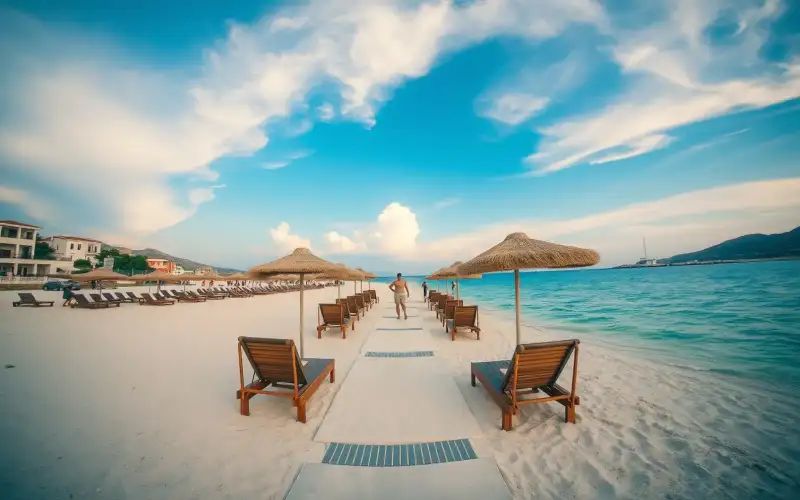
Last July, my youngest refused to eat another plate of lukewarm moussaka from the all-inclusive buffet. My partner looked at me across the poolside table and said, "That's it. Next year, we're cooking." That conversation changed everything about how we holiday in Protaras.
We'd spent five consecutive summers at the same three-star all-inclusive resort near Konnos Beach, lured by the promise of "no surprises" and "everything included." The kids had grown from eight and eleven to thirteen and sixteen. Their tastes had evolved. Their patience for standardised holiday food had evaporated. And somewhere around year three, I'd started mentally calculating the actual value of what we were eating versus what we were paying.
This summer, we booked a two-bedroom apartment in Protaras town centre, a ten-minute walk from Fig Tree Bay. What I'm about to share isn't a sales pitch for either option. It's what actually happened when we stopped outsourcing our meals and started living like locals, even if only for two weeks.
The All-Inclusive Trap: What We Thought We Were Getting
All-inclusive resorts in Protaras are seductive. The brochures show smiling families, unlimited cocktails, and the phrase "one price, everything included" in bold letters. For our first visit in 2021, we paid £1,840 for two weeks for four people at a mid-range property. That covered bed, breakfast, lunch, dinner, soft drinks, and basic entertainment. No hidden costs. No surprises. On paper, it felt like the safest bet for a family holiday.
The reality was more nuanced. Yes, we didn't pay extra for meals. But the food itself was repetitive. Breakfast rotated through the same cereals, breads, and eggs every single day. Lunch was a buffet of pasta, chicken, and salads that tasted identical on Tuesday and Friday. Dinner was slightly better—sometimes fish, occasionally lamb—but always served at fixed times. If you missed the window, you got a sad sandwich from the bar.
The hidden costs started creeping in immediately. Soft drinks were included, but my teenagers wanted fresh juices, smoothies, and the occasional cold beer (well, the sixteen-year-old's friends did; we drew the line). Snacks between meals cost extra. A decent ice cream wasn't included. Coffee that didn't taste like it had been brewed in 2019 required a tip. By week two, we'd typically spent an extra £200-300 on "extras" that felt essential but weren't technically part of the deal.
There was also the psychological cost of being tethered to a resort. The kids felt trapped. We'd wake up, eat breakfast at the hotel, swim at the hotel pool, eat lunch at the hotel, nap, eat dinner at the hotel. We'd venture out for one evening excursion—usually a boat trip or a visit to Ayia Napa—but the resort was our entire world. The staff were friendly, but after five summers, it felt like we were living in a theme park rather than visiting Cyprus.
Why We Needed a Change: The Breaking Point
By summer 2025, booking another all-inclusive felt like admitting defeat. My partner and I had started researching self-catering apartments almost as a joke. "Imagine," he said, "cooking our own food. Actual food we chose." Then we looked at the prices. A decent two-bedroom apartment in Protaras town was £800-1,200 per week. For two weeks, that was £1,600-2,400. Suddenly, the all-inclusive didn't look like such a bargain.
But cost wasn't the only factor. We wanted flexibility. We wanted to eat when we were hungry, not when the resort decided to serve dinner. We wanted our teenagers to experience something beyond the buffet—proper Cypriot food, fresh fish from the market, the kind of meals you eat sitting at a taverna watching the sunset, not under fluorescent lights in a dining hall.
And honestly, we wanted to feel like we were actually in Protaras, not just occupying a corner of it.
Our Self-Catering Summer: The Reality Check
We booked the Artemis Apartments, a small family-run property with a kitchenette in each unit. Not a full kitchen—that mattered more than we expected. The hob had two burners. The oven was compact. There was no dishwasher. These weren't deal-breakers, but they shaped how we cooked.
The first shock was the supermarket. We went to the Carrefour on the main road near Protaras town centre expecting to find familiar brands and reasonable prices. We found both, but fresh produce was about 20-30% more expensive than at home. A decent bottle of wine was £6-8, versus £4-5 in the UK. Meat from the butcher counter was excellent quality but pricier than supermarket chicken breasts back home. We quickly learned to shop at the local market on Wednesday mornings—prices were lower, the produce was fresher, and the vendors actually talked to us.
Cooking in a holiday apartment is different from cooking at home. There's no margin for error when you don't have your usual equipment. We managed, though. Pasta, grilled fish, salads, omelettes, and fresh bread from the bakery became our staples. We ate breakfast on our balcony overlooking the town. We made lunch picnics and took them to the beach. We cooked dinner most nights, though we still went out to restaurants twice a week—proper tavernas in Protaras town, not resort buffets.
The cost worked out like this: groceries for two weeks, feeding four people with one or two restaurant meals per week, came to approximately £380-420. That's roughly £27-30 per person per day for all meals. At the all-inclusive, we'd been paying roughly £65-70 per person per day, though we weren't eating our money's worth. The maths were clear.
What Self-Catering Actually Gave Us
Beyond the budget, three things changed dramatically.
First, the kids ate better. Without a buffet of fried food and pasta, they made different choices. My youngest actually ate vegetables. My sixteen-year-old discovered Greek salad and fresh fish. They weren't being forced to eat at set times; they were genuinely hungry and willing to try things. One evening, we bought fresh squid from the market and grilled it on the apartment's small barbecue. My youngest, who'd spent five summers eating hotel chicken nuggets, asked for seconds.
Second, we had actual flexibility. One day, the weather was perfect for snorkelling at Konnos Beach. We didn't have to rush back for lunch. We packed sandwiches and stayed until 4 p.m. Another day, we felt like sleeping in and had breakfast at 10 a.m. We could eat dinner at 6 p.m. or 9 p.m. depending on what we were doing. This sounds trivial until you've spent five years eating on someone else's schedule.
Third, we experienced Protaras differently. We weren't tourists being served; we were residents buying groceries, chatting with shopkeepers, eating at local tavernas by name rather than booking through the hotel. The woman at the bakery started recognising us. The fish vendor at the market saved us fresh sea bream because he knew we'd be there Wednesday morning. This is the Cyprus that doesn't appear in resort brochures.
The Honest Downsides of Self-Catering
It wasn't perfect. Let me be clear about that.
Cooking on holiday is still cooking. You're on a break, but you're also standing at a stove. My partner and I took turns making dinner, which was fine, but it meant one of us was in the apartment kitchen for an hour every evening while the other was on the balcony. At the all-inclusive, we'd have been relaxing together, even if the food was mediocre.
The kitchenette was genuinely limiting. We couldn't make the kinds of meals we'd make at home. No roasts, no slow-cooked stews, no proper baking. Breakfast was cereal and toast, not the full cooked breakfast we'd have at home. This wasn't a disaster, but it was a trade-off.
Washing up. We don't have a dishwasher at home either, but somehow holiday washing up feels worse. Every meal generated dishes. By the end of two weeks, I'd developed a strong opinion about the importance of dishwashers in holiday accommodation.
And the social aspect was different. At the all-inclusive, there were other families, kids' clubs, entertainment, a sense of community. In the apartment, we were on our own. This suited us—we're not particularly social holiday people—but families who want built-in activities and childcare might find it isolating.
The Numbers: What It Actually Cost
Here's the breakdown for two weeks in July 2026:
| Item | All-Inclusive (2025) | Self-Catering (2026) |
|---|---|---|
| Accommodation (2 weeks) | £1,840 | £1,100 |
| Groceries & meals | Included (+ £250-300 extras) | £400 |
| Restaurant meals (2x per week) | Included | £180 |
| Total | £2,090-2,140 | £1,680 |
| Per person per day | £74-76 | £60 |
The self-catering option was roughly £400-500 cheaper for the same family, same duration, same destination. That's not trivial. That's another week's holiday, or flights, or a decent budget for activities.
Which One Is Actually Better?
This is where I have to be honest: it depends entirely on what you want from a holiday.
If you have young children (under eight) and you want childcare, entertainment, and the freedom to relax without cooking, an all-inclusive resort is still a solid choice. The kids' clubs are genuinely useful. The guaranteed meals mean less stress. The social structure helps if you're travelling alone or with very young kids.
If you have teenagers or older children, or if you're a couple looking for flexibility and authenticity, self-catering in an apartment is probably better value. You'll eat better, spend less, and actually experience Protaras rather than a resort version of it.
If you want the best of both worlds, some apartments offer optional meal plans or are close enough to tavernas that eating out becomes your default. We found that having a kitchenette for breakfast and lunch, then eating out for dinner, was our sweet spot.
What I know for certain is this: we're not going back to all-inclusive. Next summer, we're booking the Artemis Apartments again. We've already asked the owner to reserve our preferred unit. My youngest is already planning what she wants to cook. My partner is researching local fish markets. And I'm genuinely excited about a holiday that involves a supermarket shop and a two-ring hob.
That's not something I ever expected to say.
Comments (4 comments)