
The Friday Night Dilemma: Two Titans of Family Entertainment
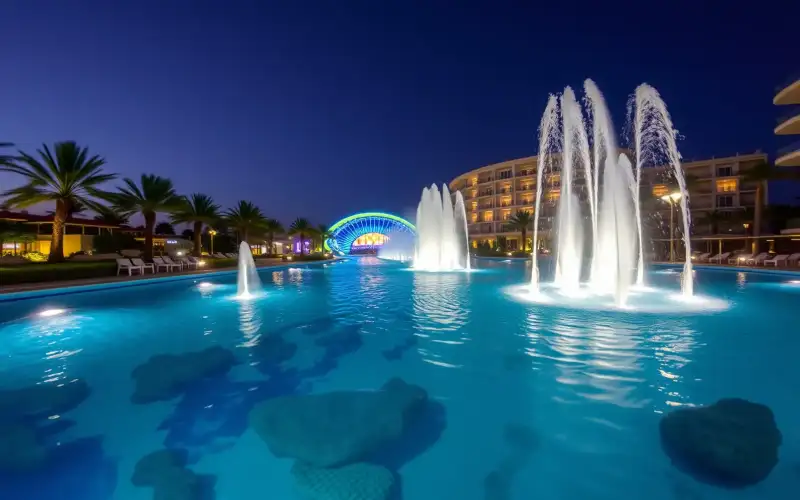
It's 6 p.m. on a Friday in July 2026, and you're sitting at your hotel in Protaras with a decision that feels surprisingly weighty for a holiday. Your kids—ages 7, 9, and 11—are bouncing on the bed asking which evening show you're hitting tonight. The Magic Dancing Fountains, with their hypnotic light-and-water choreography that's been drawing crowds since 2008, or the Ocean Aquarium, where you can actually touch a starfish and watch sharks glide past the viewing panel? Both are within 10 minutes of Fig Tree Bay. Both promise two solid hours of entertainment. Both will cost you roughly the same. So which one actually wins for families like yours?
I've taken my own kids to both attractions multiple times over the past three summers, and I've learned that the answer isn't obvious. It depends on what your children actually respond to, what time of year you're visiting, and honestly, what kind of evening energy you're after. Let me break down the real numbers and the real experience.
The Headline Numbers: Price, Duration, and Logistics
Let's start with what matters most when you're budgeting a holiday evening: how much it costs and how long you'll actually be entertained.
Magic Dancing Fountains sits at the northern edge of Protaras town center, within walking distance of the main promenade. Adult tickets in 2026 run €15–€17 per person depending on the show (the 9:30 p.m. slot is usually €17, earlier shows €15). Children aged 3–12 are €10–€12. That means a family of four—two adults and two primary-age kids—is looking at roughly €54–€58 for the main evening show. The show itself runs 45 minutes, though most families spend 20–30 minutes before the show starts exploring the small café area and soaking in the pre-show atmosphere. You're out by 10:15 p.m. if you catch the 9:30 p.m. performance.
Ocean Aquarium is located in the central seafront area, about 8 minutes' walk from the main beach. Adult entry is €16–€18 per person; children (3–12) are €11–€13. A family of four pays roughly €58–€62. Here's the critical difference: there's no time limit. Most families spend 90–120 minutes inside, moving at their own pace through the tanks. Some kids will spend 10 minutes mesmerized by the seahorses; others will race through in 45 minutes. You control the rhythm entirely.
The Real Cost Per Hour of Entertainment
This is where the comparison gets interesting. If you're at the Fountains for 45 minutes of actual show time, you're paying roughly €13–€14 per person per hour. At the Aquarium, assuming a 90-minute visit, you're paying roughly €9–€11 per person per hour. On paper, the Aquarium edges ahead on value. But—and this is crucial—the Fountains offer something the Aquarium doesn't: a scheduled, sit-down experience that requires zero decision-making. You arrive, you sit, the show happens, you leave. The Aquarium demands engagement and patience; if your 7-year-old is overwhelmed by crowds or sensory input, it can feel rushed.
The Experience Breakdown: What You Actually Get
Magic Dancing Fountains: The Spectacle Factor
The fountains perform six times daily during peak season (June–September 2026), with shows at 7:30 p.m., 8:30 p.m., and 9:30 p.m. being the most popular. The choreography is genuinely impressive—fountains shoot 15–20 meters into the air, synchronized to everything from classical music to contemporary pop. I've watched my kids' faces light up during the opening bars of Vivaldi's "Summer" as the water explodes in perfect rhythm. It's pure spectacle, and it works.
The seating is tiered and comfortable. You get a clear view from almost anywhere in the 500-person amphitheater. The café sells overpriced but decent ice cream (€4–€5 a scoop), cold drinks, and snacks. Most families arrive 15–20 minutes early, grab a drink, and settle in. The atmosphere is genuinely festive—you're surrounded by other families, there's an energy in the air, and kids feed off that excitement.
The downsides? It's loud. Very loud. The music is cranked to concert volume, which some younger kids find overwhelming. The show is also relatively short—45 minutes feels like it ends just as your kids are fully engaged. And if your child has sensory sensitivities or anxiety in crowds, the packed seating and noise level can be genuinely stressful.
Ocean Aquarium: The Hands-On Discovery Factor
The Aquarium operates from 10 a.m. to 6 p.m. daily, with extended summer hours until 7 p.m. (June–August 2026). There's no scheduled show; instead, you move through 12 main tank sections at your own pace. The layout is logical and kid-friendly: tropical fish tanks first, then rays and small sharks, then the main Mediterranean section with larger species, and finally a touch pool where children can actually handle starfish, sea urchins, and hermit crabs under staff supervision.
This hands-on element is transformative for most primary-age kids. I watched my 8-year-old spend 15 minutes gently stroking a starfish, asking the attendant questions about how it moves and eats. That kind of tactile, curious engagement is something no fountain show can replicate. The Aquarium also has educational signage at kid-height, so children can read facts about each species independently—which older primary-age kids find genuinely rewarding.
The facility is air-conditioned and never feels cramped, even during peak season. You can move slowly or quickly depending on your energy. Staff are knowledgeable and patient. The café is less impressive than the Fountains' setup (basic sandwiches, drinks, no ice cream), but it's quieter and more functional for a proper break.
The downsides? If your kids aren't interested in marine life, they'll be bored. There's no narrative arc or climax—it's a steady experience, not a crescendo. And if you have very young children (under 5), the touch pool queues can get long during peak times, and younger kids sometimes struggle with the patience required to wait their turn.
The Data: Visitor Patterns and Seasonal Timing
Let's look at what actually happens when families visit each attraction across different seasons in 2026.
| Metric | Magic Dancing Fountains | Ocean Aquarium |
|---|---|---|
| Peak season crowd level (July–Aug) | Very high (500+ per show) | Moderate to high (100–150 at any time) |
| Best time to visit | Early show (7:30 p.m.) for smaller crowds | Late afternoon (4–6 p.m.) for fewer queues |
| Typical visit duration | 45 minutes (show only) | 90–120 minutes (self-paced) |
| Suitable age range | 5–14 years (older kids appreciate choreography) | 3–12 years (younger kids often more engaged) |
| Noise/sensory level | High (concert-volume music) | Low to moderate (ambient aquarium sounds) |
| Interactive elements | Visual only | Touch pool, reading, observation |
| Weather dependency | Runs in rain (covered seating) | Fully indoors |
| Best for | Kids who love spectacle and music | Curious kids, families seeking calm pace |
Summer Crowds: What the Data Shows
During July and August 2026, the Fountains attracts roughly 2,500–3,000 visitors per week across all shows. Peak times (8:30 and 9:30 p.m. shows) see 500+ people crammed into the amphitheater. The Aquarium, by contrast, sees roughly 800–1,200 visitors per week, spread across opening hours. This means you'll experience significantly less crowding at the Aquarium, even in peak season. If your family struggles with queues or packed spaces, this is a decisive advantage.
The Fountains do offer a 7:30 p.m. early show that draws smaller crowds—typically 150–200 people—but the tradeoff is that the light show is less visually impressive in the lingering daylight. The 9:30 p.m. show is spectacular but exhausting if your kids are already tired by late evening.
The Real Question: Which Actually Wins?
Choose the Fountains If...
- Your kids are aged 8–14 and love music, dance, and visual spectacle
- You want a defined, sit-down experience that requires zero planning or pacing
- You're visiting in shoulder season (May, June, September) when crowds are manageable
- Your children have short attention spans and need a structured show format
- You want to grab a quick evening activity that fits neatly between dinner and bed
- Your kids enjoy being part of a crowd and feeding off collective energy
Choose the Aquarium If...
- Your kids are naturally curious about animals and marine life
- You want to spend 90+ minutes on a single activity without rushing
- You're visiting during peak summer (July–August) when you want to avoid massive crowds
- Your children have sensory sensitivities or anxiety in loud, packed environments
- You want hands-on engagement and learning, not just observation
- You prefer a calm, air-conditioned experience at your own pace
The Verdict: Price, Value, and the Best Evening Out
Here's what the numbers and my own experience tell me: the Ocean Aquarium offers better overall value for most British families visiting Protaras in 2026. You're paying roughly the same price per person, but you get 90–120 minutes of engagement instead of 45 minutes. You control the pacing. You avoid massive crowds. And the hands-on touch pool creates memories that spectacle alone rarely matches.
That said, the Magic Dancing Fountains are genuinely worth seeing at least once during your holiday. The choreography is genuinely impressive, and kids aged 8+ will remember the experience. Just go early (7:30 p.m. show) to avoid the worst crowds, and don't expect it to be the centerpiece of your evening—treat it as a 90-minute outing (including pre-show time and walking) rather than a full evening activity.
If you're staying for a week in Protaras with primary-age kids, my recommendation is simple: hit the Aquarium on one evening (late afternoon, around 4 p.m., to beat queues), and the Fountains on another evening (early show, 7:30 p.m.). You'll get the best of both worlds, avoid crowds at both attractions, and your kids will talk about both experiences for months afterward. That's the real win.


Comments (2 comments)