
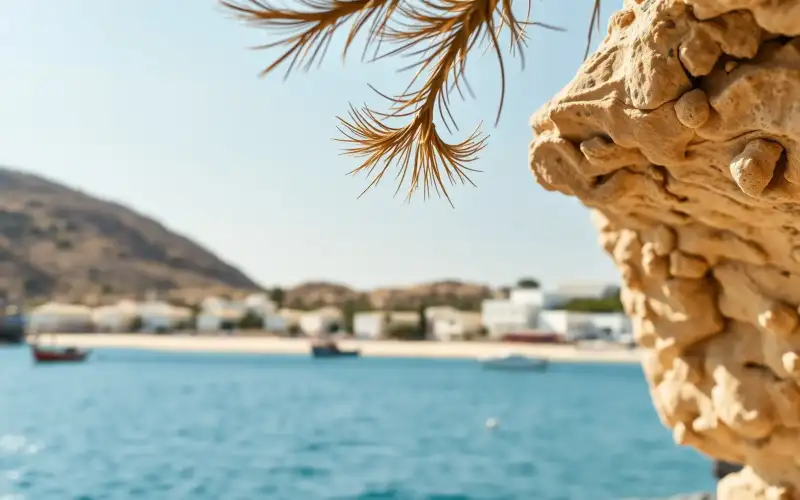
The first time I drove to Cape Greco, my daughter had her mask and fins in her lap before we'd even left the hotel car park. She'd spotted the turquoise water from the road the day before and that was that — nothing else would do. We pulled into the small parking area near the sea caves just after 9am, the air already warm and smelling of wild thyme, and within twenty minutes she was floating face-down over a rocky shelf watching parrotfish nibble at the limestone. That morning became one of those rare holiday moments that everyone actually agrees was brilliant, including the teenagers.
Cape Greco — or Cavo Greco, as you'll see it spelled on local signs — is a protected national forest park covering roughly 385 hectares at the south-eastern tip of Cyprus. It sits between Protaras to the north and Ayia Napa to the west, and the drive from Fig Tree Bay takes about ten minutes along the coastal road. If you're staying anywhere in the Protaras strip, this is genuinely one of the easiest and most rewarding half-day trips you can do. No coach required, no entrance fee, no booking ahead.
What Is Cape Greco, Actually?
People often assume Cape Greco is just a viewpoint or a beach. It's neither — or rather, it's far more than both. The park is a headland of ancient limestone carved by millennia of wave action into arches, caves, sea stacks and blowholes. The vegetation is low and scrubby — juniper, lentisk, wild sage — which means the views are almost always open and the light is extraordinary, especially in the morning and late afternoon.
There's a military radar installation at the very tip of the cape, which is fenced off and inaccessible to the public. Don't let that put you off — the best bits are all around the edges, and the coastal paths loop the accessible areas beautifully. The European long-distance walking route E4 passes through here, which tells you something about the quality of the landscape.
The park is managed jointly by the Cyprus Department of Forests and the Ayia Napa municipality. In practice, this means the main paths are well-marked, there are information boards at key points, and the parking areas are free. Facilities are minimal — a couple of picnic tables, some bins — so bring everything you need with you.
Getting There from Protaras: Parking and Practicalities
From Protaras, follow the coastal road south past the Sunrise Beach area. You'll pass through Konnos Bay (worth a stop in itself — more on that later) and then the road curves inland slightly before signs point you towards the cape. There are three main parking areas:
- Sea Caves car park — the most popular, right beside the main geological features. Small, free, fills up by 10am in July and August. Arrive before 9am or after 5pm to guarantee a space.
- Kamara tou Koraka car park — slightly further along, closer to the Bridge of Lovers arch. Slightly larger, also free.
- Agia Napa road-side lay-bys — informal stopping points on the western approach, useful if the main areas are full.
There's no public bus that goes directly to the cape, but the OSEA bus route 102 runs between Protaras and Ayia Napa and stops near the cape access road — from there it's about a 15-minute walk to the sea caves. If you're without a hire car, a taxi from Protaras centre costs around €10-12 each way and most drivers are happy to come back for you at a set time.
The Sea Caves: What to Expect
This is the headline act, and it genuinely delivers. The sea caves at Cape Greco are a series of wave-carved chambers and arches in the pale limestone cliffs, sitting right at water level. Some you can peer into from above; others you can swim or snorkel into from the sea. The water here is a ridiculous shade of blue-green — the kind of colour that makes you think your eyes are broken — and the visibility on a calm day can reach 20 metres or more.
For snorkellers, the area around the caves is exceptional. The rock formations continue underwater, creating ledges, overhangs and swim-throughs that are home to octopus, moray eels, sea bream, and if you're lucky, the occasional sea turtle drifting past. My son, who is fifteen and deeply unimpressed by most things, spent two hours here last September and came out buzzing. The entry points are rocky — proper reef shoes or old trainers are essential — and there's no beach as such, just flat limestone shelves that drop into the water.
The water clarity at the Cape Greco sea caves is some of the best in the eastern Mediterranean. On a calm morning with the sun at the right angle, you can see the bottom at 15 metres without even putting your face in.
The caves themselves are best viewed from the coastal path above, which runs along the cliff edge and gives you a bird's-eye perspective on the chambers below. There are safety railings at the most dramatic points, though you should keep young children close — the drops are real and the path occasionally gets very close to the edge.
The Bridge of Lovers (Kamara tou Koraka)
About 800 metres along the coastal path from the sea caves, you'll reach the natural arch known as the Bridge of Lovers. The local name — Kamara tou Koraka — translates roughly as the Arch of the Crow, which is considerably less romantic but arguably more accurate. The arch is a free-standing limestone formation created when the roof of a sea cave collapsed, leaving a narrow bridge of rock spanning a deep inlet.
The legend, which every boat trip captain in Protaras will tell you, goes that couples who jump from the arch together will be bound in love forever. In practice, jumping is not recommended and probably not legal within the national park. What you can do is walk across the arch itself — it's wide enough, though exposure to the drop on both sides makes it feel more dramatic than it is — and photograph it from the path below, where the framing against the sea is genuinely stunning.
With kids, the arch is a great focal point for a walk — it's close enough to the car park to be manageable even with tired legs, and dramatic enough to feel like a proper destination. Allow about 20-30 minutes each way from the sea caves car park if you're walking at a relaxed pace with children.
Walking Trails: Which Route for Your Family?
Cape Greco has several marked trails, ranging from a flat 20-minute stroll to a full coastal circuit that takes three hours. Here's a quick breakdown:
| Trail | Distance | Time | Difficulty | Pushchair-friendly? |
|---|---|---|---|---|
| Sea Caves Loop | 1.2 km | 25-35 min | Easy | Mostly yes — some uneven sections |
| Sea Caves to Bridge of Lovers | 1.6 km one way | 30-45 min | Easy-Moderate | No — rocky path sections |
| Full Coastal Circuit | 7 km loop | 2.5-3 hrs | Moderate | No |
| Viewpoint Trail (from Kamara car park) | 0.8 km | 20 min | Easy | Partial — first 400m fine |
For families with young children or pushchairs, the Sea Caves Loop is the one to go for. The path is mostly compacted gravel and flat limestone, and the views are spectacular throughout. The section closest to the cliff edge has a low barrier, so it's manageable with a buggy if you're careful, though you'll want to keep toddlers firmly by the hand.
For older kids and teenagers, the full coastal circuit is absolutely worth doing if you have the time and energy. It takes you around the entire headland, past several remote swimming inlets, through the juniper scrubland, and back along a slightly inland path. Take two litres of water per person minimum — there are no cafes or taps anywhere in the park — sun cream, hats, and proper shoes. The limestone can be sharp underfoot and the path occasionally scrambles over boulders.
Swimming and Snorkelling Spots
Cape Greco isn't a beach destination in the traditional sense — there are no sandy bays within the national park itself — but the swimming and snorkelling is among the best on the island. The key spots are:
- The sea caves entry points — rocky ledges just north of the main cave formations. Best in the morning when the light penetrates the water. Entry requires confidence on rocks; not suitable for very young children without supervision.
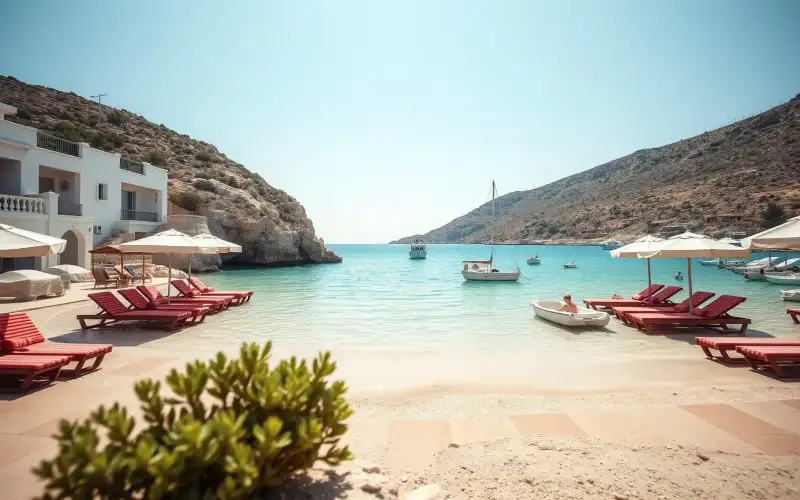
- Konnos Bay — technically just outside the national park, about 2km north on the road back to Protaras. Sandy beach, sun loungers for hire at around €8 per bed in 2026, calm and sheltered. Excellent snorkelling along the rocky edges of the bay. This is the family-friendly base if you want sand alongside your snorkelling.
- Remote inlets on the coastal circuit — there are three or four small rocky coves accessible only on foot along the full trail. No facilities whatsoever, but extraordinary solitude and crystal-clear water. Bring a picnic.
Konnos Bay is our family's default — we snorkel the cape in the morning, then retreat to Konnos for lunch and an afternoon on the sand. It's the perfect combination and the drive between the two is five minutes.
Viewpoints and Photography
The whole cape is photogenic, but there are a few spots that are genuinely special. The elevated viewpoint above the main sea caves — reached via a short stepped path from the car park — gives you a panoramic view south over the Mediterranean that on a clear day stretches towards Egypt. The light is best in the early morning and in the hour before sunset, when the limestone turns amber and the sea shifts through every shade of blue imaginable.
The arch at Kamara tou Koraka photographs best from below, from the rocky shoreline, where you can frame it against the open sea. Getting down to that level requires a short scramble and is not suitable for pushchairs or anyone unsteady on their feet, but it's worth it. The cave interiors, if you can get close by water, are extraordinary in the mid-morning light when the sun angle sends shafts of turquoise light through the underwater openings.
Drone flying is technically restricted within the national park, though you'll see people doing it. The official position is that you need a permit from the Cyprus Department of Civil Aviation for commercial use; recreational flying is in a grey area but frowned upon near the cliff edges for safety reasons.
How Long to Spend at Cape Greco
A minimum of two hours lets you see the sea caves, walk to the arch and back, and have a quick swim. Three to four hours gives you time to snorkel properly, eat a packed lunch at one of the picnic spots, and explore at a relaxed pace. A full day, combining the cape with Konnos Bay, is genuinely one of the best things you can do in the Protaras area — we've done it three times now and it never gets old.
If you're visiting with children under five, two hours is probably enough before the heat and the rocky terrain start to tell. Bring a carrier rather than a pushchair if your child still needs one — the terrain is uneven enough that a baby carrier is far more practical for anything beyond the sea caves loop.
Who Is Cape Greco Best For?
Honestly? Almost everyone who visits Protaras should make the trip at least once. It's particularly brilliant for:
- Snorkellers and divers — the underwater topography is exceptional and the water clarity is outstanding
- Families with children aged 7 and upwards — old enough to manage the rocky paths and appreciate the caves
- Couples wanting something beyond the beach — the landscape is dramatic and the quieter trails feel genuinely remote
- Photography enthusiasts — the light, the geology and the colour of the water are all extraordinary
- Anyone who wants to understand why this corner of Cyprus is genuinely special rather than just another package-holiday beach
It's less ideal for families with very young toddlers who need sandy, safe play areas — for those days, stick to Fig Tree Bay or Konnos. And if the sea is rough, the cave area can be dangerous and the snorkelling is off — always check conditions before you head out. The cape faces south-east, so it's sheltered from the prevailing westerlies but exposed to anything coming from the south.
Verdict: Is Cape Greco Worth It?
Without hesitation, yes. Cape Greco is the kind of place that reminds you why you chose Cyprus over a pool holiday. The sea caves are genuinely dramatic, the snorkelling is world-class by European standards, the walks are accessible without being boring, and the whole thing is free. Ten minutes from Protaras, no booking required, no entrance fee.
Go early — before 9am if you can manage it — to beat the tour groups and the heat. Take water, sun protection, reef shoes and a snorkel. Let the teenagers lead the way to the cave entry points and watch them forget to be unimpressed. That, in my experience, is the real magic of Cape Greco.
Comments (3 comments)