
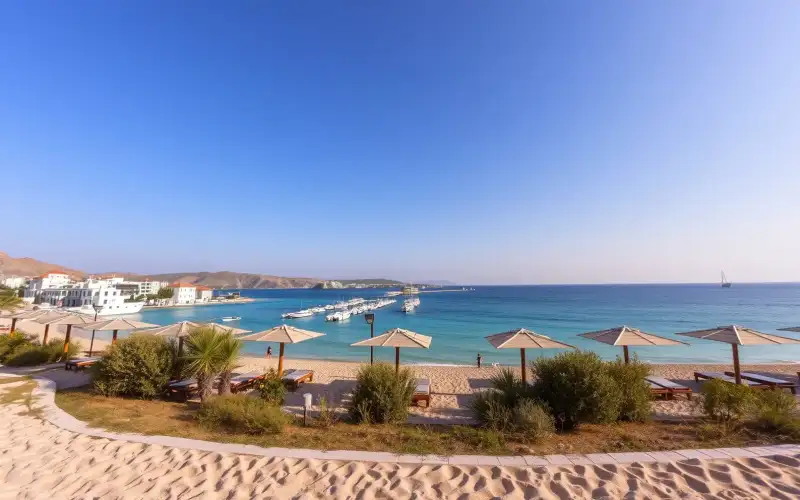
My daughter was three when we first arrived in Protaras in July 2014. I remember standing in the middle of the promenade with a pushchair, completely bewildered by choice. Every corner looked the same—tavernas, sunbeds, blue water. Where were we actually supposed to stay? Seven summers later (and now with two kids), I've learned the hard way that picking your neighbourhood makes or breaks a Cyprus holiday.
The truth is, Protaras, Pernera and Kapparis aren't just different postcodes. They're genuinely different experiences. One's loud and buzzy. One's sleepy and family-focused. One's caught somewhere in between. And if you get it wrong, you'll spend two weeks listening to club music at midnight or feeling isolated because there's nowhere to walk for an ice cream.
Let me walk you through what I've actually discovered, not what the hotel brochures tell you.
The Problem: How Do You Know Which Area Suits Your Family?
When you're booking a holiday to Protaras, the accommodation websites show you hotels and villas scattered across three main zones. But they don't tell you what it's really like to live in each one for a week or two. They don't mention that some areas have a fifteen-minute walk to anywhere decent, or that others are so lively you'll hear Greek music and laughter until 1 a.m.
I've stayed in hotels across all three areas now, and I've talked to dozens of other British families who've done the same. The pattern is clear: most people pick based on price or a pretty photo, then arrive and realise they've made a mistake. The couple who wanted peace and quiet ended up in the heart of party central. The family looking for a lively atmosphere got stuck in a quiet stretch with nothing within walking distance.
The stakes feel higher when you've got kids. You're not just thinking about yourself—you're thinking about where they'll play safely, whether you'll have energy for evening meals out, and if your partner will actually get a decent night's sleep. Plus, if you're a returning visitor (and honestly, if you're reading this, you probably are—Protaras people are loyal), you might be reconsidering your usual spot or trying something new.
Why This Matters More Than You'd Think
Here's what I've learned: the difference between a good holiday and a great one often comes down to location. It's not about the thread count on the sheets or whether breakfast is served until 10 a.m. It's about whether you can walk somewhere interesting in the evening without needing a taxi, whether the beach outside your hotel is actually swimmable, and whether you'll feel like you've genuinely switched off.
Protaras, Pernera and Kapparis are only a few kilometres apart—literally a ten-minute drive between the furthest points. But that distance hides real differences in atmosphere, beach quality, walkability and what kind of holiday you'll actually have.
For families with young children, the neighbourhood choice affects everything: how easily you can grab a coffee while the kids play, whether you'll feel safe letting them run around, how far you have to walk to find a decent taverna that won't charge you £18 for a kids' meal. For couples, it's about whether you can find peace and quiet or whether you're craving that Mediterranean buzz. For returning regulars, it's often about finding somewhere new that still feels like home.
I've also noticed that your choice affects your daily rhythm. Stay in the wrong area and you're either rushing about trying to find things to do, or you're paying for taxis constantly. Stay in the right one, and suddenly your holiday feels effortless.
Protaras: The Heart of Everything
Protaras proper—the area around Fig Tree Bay and the main seafront promenade—is where most visitors end up. It's the busiest, the most touristy, and honestly, it's where the energy is.
The beaches here are genuinely beautiful. Fig Tree Bay is the postcard-perfect one, with golden sand and clear water that's ideal for young swimmers. The beach shelves gradually, so even three-year-olds can paddle safely. In 2026, the lifeguard presence is reliable (usually 10 a.m. to 6 p.m., depending on season), and the beach is well-maintained. There are sunbed rentals (around €5-8 per bed per day), and plenty of tavernas right on the sand.
The promenade itself is the draw. You can walk from one end to the other—roughly two kilometres—and find restaurants, bars, ice cream shops, and toy shops. For families, this is genuinely useful. You can pop out for dinner without needing a car, and if the kids get bored, there's always something to look at. The atmosphere is lively, especially in July and August. There's music from bars, people everywhere, and a real sense of holiday bustle.
But here's the honest bit: it's loud. If you're staying right on the promenade, you'll hear music and voices until late. Hotel rooms facing the seafront can be noisy, particularly at weekends. I stayed in one place where a bar next door played Greek music until 1 a.m., and the windows weren't thick enough to block it out. It didn't bother me (I was younger then, and honestly a bit excited by the atmosphere), but my friend with two toddlers found it exhausting.
The promenade is also increasingly crowded in peak season. July and August can feel genuinely rammed, especially around Fig Tree Bay. If you prefer space and quiet, this might not be your zone. That said, if you're the type who loves being in the middle of things, wants easy access to restaurants and nightlife, and doesn't mind a bit of noise, Protaras is perfect.
Prices in central Protaras tend to be higher than in Pernera or Kapparis. A mid-range family hotel (three-star, with pool and kids' club) typically runs £80-120 per night in shoulder season (May-June, September-October) and £120-180 in peak summer. Beachfront places are dearer.
Pernera: The Quiet Alternative
Pernera sits just south of central Protaras, separated by a small headland. It's quieter, more residential, and increasingly popular with families who've discovered it.
The beaches here are excellent. Pernera Beach itself is smaller and less crowded than Fig Tree Bay, with the same golden sand and clear water. Because it's slightly removed from the main promenade, it feels more peaceful. You'll still find sunbeds and tavernas, but there's less of the frenetic energy. I've had some of my best beach days in Pernera—the kind where you can actually read a book without someone trying to sell you a jet ski tour.
The neighbourhood has its own small promenade with tavernas, a few shops, and a decent supermarket. It's not as extensive as Protaras, but it's enough. You can walk out for dinner, grab groceries, and find an ice cream shop. The atmosphere is more local, less touristy. You'll see Greek families here, not just British holidaymakers.
The real advantage of Pernera is the noise level. It's genuinely quieter. Hotels set back from the seafront are peaceful at night. If you're someone who values sleep and calm mornings, Pernera is noticeably better than central Protaras. My friend Sarah switched from Protaras to Pernera three years ago and says she's never gone back—she actually sleeps through the night now.
The trade-off is that there's less to do if you want to go out in the evening. You're not walking past twenty different restaurants and bars. You're choosing from a smaller selection. For some families, that's a relief. For others, it feels limiting. I find it depends on what kind of holiday you want: do you want to explore and choose, or do you want to be told where to go?
Walkability is good but not as extensive as Protaras. You can walk to restaurants and the beach easily, but if you want variety, you might need a taxi or car to get back to central Protaras. That's not a huge deal—a taxi ride is a few euros—but it's worth factoring in.
Prices in Pernera are generally lower than central Protaras. Similar three-star family hotels run £65-100 in shoulder season and £95-150 in peak summer. You're paying less, partly because it's quieter and less central, but also because you're not paying a premium for seafront buzz.
Kapparis: The Middle Ground
Kapparis is north of Protaras, positioned between the main town and Ayia Napa. It's the least well-known of the three, which means it's often overlooked—but that's actually its advantage.
The beaches here are beautiful and less crowded than Fig Tree Bay. Kapparis Beach is a proper sandy beach with good facilities, and because fewer tourists know about it, you'll find more space, especially in peak season. The water quality is excellent, and the beach has a more local feel.
The village itself is small and genuinely quiet. There's a main street with tavernas, a few shops, and a supermarket. It doesn't have the energy of central Protaras, but it has more going on than Pernera. You can walk to dinner and find decent restaurants without feeling like you're choosing from a limited menu.
The trade-off is accessibility. Kapparis is further from the main attractions. Fig Tree Bay is a short drive away, but you won't be walking there casually. If you want to explore the Protaras promenade, you'll need transport. For some people, that's fine—they're happy to stay put and enjoy their immediate area. For others, it feels isolating.
Walkability within Kapparis itself is fine, but the broader area isn't as connected as Protaras. You're more car-dependent if you want to vary your activities.
Prices in Kapparis are the lowest of the three. Three-star family hotels typically run £55-85 in shoulder season and £80-130 in peak summer. You're getting good value, partly because it's less touristy and partly because it's further from the main hub.
The Comparison: What Actually Matters
Let me break this down into what you actually care about:
| Factor | Protaras (Central) | Pernera | Kapparis |
|---|---|---|---|
| Beach Quality | Excellent (Fig Tree Bay is famous for a reason) | Excellent (less crowded) | Excellent (quietest option) |
| Noise Level | Loud, especially at night | Quiet and peaceful | Very quiet |
| Walking Distance to Restaurants | Excellent (twenty+ options) | Good (decent selection) | Good (smaller selection) |
| Family-Friendliness | Good (busy, lots to do) | Excellent (calm, safe) | Excellent (very calm) |
| Nightlife/Evening Activity | Excellent (bars, clubs, music) | Moderate (quieter bars) | Limited (village tavernas) |
| Price | Highest | Middle | Lowest |
| Crowd Level | Very busy, especially peak season | Moderate | Quiet |
Which Area for Your Holiday Style?
Choose Protaras (Central) if: You want to be in the thick of things. You enjoy restaurants and bars. You want lots of activities within walking distance. You don't mind noise and crowds. You're on a shorter trip and want to maximise experiences. You're younger, or you're the type who gets bored easily.
Choose Pernera if: You have young children and value peace and quiet. You want a beach holiday without the chaos. You like restaurants and activities, but prefer them calmer. You want to feel like you've escaped, but still have easy access to things. You're a returning visitor wanting a change of pace.
Choose Kapparis if: You want genuine quiet and space. You're happy to stay in one area rather than exploring constantly. You're budget-conscious. You prefer a more local, less touristy vibe. You want the beach and restaurants, but not the party atmosphere.
Honestly? If you've got children under eight, I'd lean toward Pernera or Kapparis. The noise in central Protaras can be genuinely exhausting when you're trying to get small kids to sleep. If you're couples without children, or you've got teenagers, central Protaras is brilliant. If you're a returning regular, try switching areas—you might discover something you love.
Practical Tips for Deciding
Here's what I'd actually do:
- Check your hotel's exact location on Google Maps.
Comments (6 comments)