
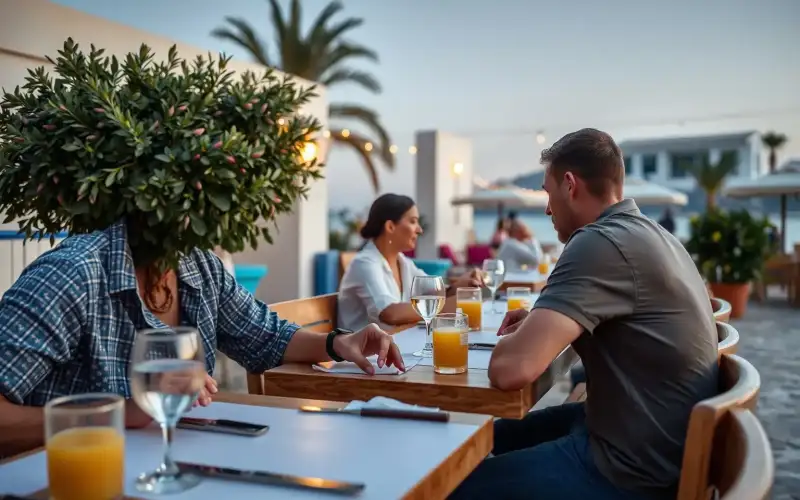
Last July, my kids spotted a taverna with white tablecloths and sea views near the harbour, and before I could check the menu board, my daughter had already mentally ordered three courses. The final bill? Forty-eight euros for one adult main, one child's portion, and a soft drink. I nearly choked on my wine.
That's the thing about Protaras in 2026: you can spend like you're in Mykonos, or you can eat brilliantly for what you'd pay at a mid-range chain back in Leeds. The difference isn't luck—it's knowing where to go, what to order, and when to eat. After twelve summers coming here with my family, I've learned to navigate the restaurant scene like a local, and honestly, some of my best meals have cost half what the tourist traps charge.
If you're planning a family holiday and want to keep food costs sensible without sacrificing quality, this is what actually works.
Understanding Protaras Restaurant Pricing in 2026
The first thing to understand is that Protaras has two completely different restaurant economies running side by side. There's the strip—mainly along the main road and the seafront near the central beach—where a grilled fish can cost 22–28 euros and a simple salad runs 8 euros. Then there's everywhere else, where the same fish costs 14–16 euros and you get better portions.
The markup on the strip isn't always about quality. It's about footfall, rent, and the fact that many visitors don't bother checking prices before sitting down. I've watched families order without looking at menus, then look genuinely shocked at the till. One couple near us last summer paid 156 euros for four mains, two beers, and a bottle of house wine—at a place that wasn't even particularly good.
The real value in Protaras sits one or two streets back from the seafront, in family-run places that have been operating for fifteen or twenty years. These aren't fancy. The chairs might not match. The menu might be handwritten. But the food is honest, portions are generous, and the owners actually care whether you come back.
The Meze Strategy: How to Eat Like Royalty for Less
This is the single best way to save money and eat better in Protaras. Meze—small plates of different dishes—is how Cypriots eat, and it's how you should too.
Here's what I've learned: order 4–5 meze dishes for two adults, or 5–6 for a family of four with children. The cost typically runs 2.50–4.50 euros per dish, so you're looking at 12–24 euros total for a full meal for two people. That's genuinely cheap, and you get variety—grilled halloumi, saganaki (fried cheese), tzatziki, dolmades, grilled octopus, souvlaki, and proper village salad with Cypriot cheese.
The trick is knowing which tavernas do meze properly. Avoid places where the meze plates look pre-plated and tired. Good meze comes out fresh, hot, and in generous portions. At Taverna Christos (back from the main strip, near the old town), a meze for two—six dishes including grilled fish—costs around 18 euros. At the seafront equivalent, you'd pay 32.
With kids, I order 3–4 meze plates plus extra bread, and they eat from everything. My son particularly loves the grilled cheese and octopus, my daughter goes for anything with tomato. It teaches them to try things, and it's genuinely cheaper than ordering them individual mains.
One more thing: meze at lunch is often 15–20% cheaper than dinner, and the food is identical. If you can eat your main meal at 1 p.m., you'll save money across the board.
Lunch Deals and Early-Bird Pricing
Most tavernas in Protaras don't advertise lunch specials, but they exist. Between noon and 2 p.m., many places offer what amounts to a discount simply because they're less busy and want to fill seats.
Here's what happens: a grilled fish that costs 24 euros at dinner costs 18 euros at lunch. A main course that's 14 euros in the evening is 11 euros midday. It's not a formal deal—you won't see it on a board—but if you ask, or if you're observant, you'll notice the prices are lower on the lunch menu board.
Taverna Yiannis, about five minutes' walk inland from Fig Tree Bay, does a particularly good lunch deal. Their grilled sea bream, salad, and bread runs 16 euros at lunch, 22 euros at night. Same fish, same kitchen. We've made it a habit to eat our main meal at 1 p.m., then have something light in the evening—a meze plate and a drink—which costs about 8 euros.
Early evening—5 to 6 p.m.—is also quieter, and some places will negotiate on price if you're a family of four ordering four mains. I've had servers suggest we share two mains instead and charge a reduced rate. It doesn't hurt to ask, especially if you're not on a busy Friday night.
Where Supermarkets Save You Real Money
Here's the bit that genuinely surprises people: breakfast and beach lunches from supermarkets are where families save the most.
A hotel breakfast in Protaras runs 12–18 euros per person. A taverna breakfast (eggs, toast, juice, coffee) costs 8–12 euros. But a supermarket breakfast? You're looking at 3–4 euros per person if you buy bread, cheese, ham, yoghurt, and fruit from Carrefour or the local supermarket near the town centre.
We do this almost every day. A loaf of decent bread costs 1.20 euros, a packet of local cheese is 2 euros, ham is 2.50 euros, and a pot of Greek yoghurt is 1.80 euros. That feeds four of us breakfast for under 8 euros total. At a taverna, we'd spend 35–40 euros for the same thing.
For beach lunches, the maths is even more dramatic. A sandwich from a beachfront café costs 7–9 euros. A supermarket equivalent—bread, cheese, tomato, cucumber, olives—costs 2–3 euros and tastes fresher. We make four sandwiches, grab some fruit and water, and spend 8 euros on lunch for the whole family. A taverna would charge us 45–50 euros.
Carrefour (the big supermarket near the roundabout heading towards Paralimni) has the best prices. The smaller local shops near the town centre are slightly dearer but still cheaper than eating out. Stock up on the first day, and you've just cut your food costs by a third.
Tavernas Worth Your Money: The Real Value Players
These are the places I actually return to, year after year, because they deliver honest food at fair prices.
- Taverna Christos (back from the main strip): Six-dish meze for two, 18 euros. Grilled fish, 15–17 euros. Family-run, no fuss, proper Cypriot food. Lunch is noticeably cheaper.
- Taverna Yiannis (inland, five minutes from Fig Tree Bay): Grilled sea bream with salad, 16 euros at lunch. The owner, Yiannis, remembers regulars and doesn't overcharge. Wine is 12 euros a bottle, which is fair for Cyprus.
- To Petrino (town centre, away from seafront): Meze plates are generous. Four dishes for two people, 14 euros. Grilled halloumi is excellent. Always busy with locals, which is a good sign.
- Taverna Panagiota (near the old church): Small, family-run, no sea view but no sea-view prices. Mains are 10–13 euros. Souvlaki is brilliant. They do a lunch special that isn't advertised: ask for it.
- O Fournos (bakery-restaurant hybrid): Not fancy, but the grilled chicken souvlaki is 8 euros, meze plates are 2–3 euros each, and the bread is fresh because they bake it. Breakfast here is genuinely good value—eggs, toast, coffee, 6 euros.
- Taverna Sophia (quieter part of town): Meze is 3 euros a plate. Fish is 16–18 euros. The owner, Sophia, is honest about portions and will suggest sharing if she thinks it's better value for you.
- To Kastro (slightly inland): Family-run, no tourists, genuinely cheap. Mains are 11–14 euros. Wine is 10 euros a bottle. The grilled fish is smaller but perfectly fresh and perfectly priced.
- Taverna Dimitri (near the secondary school): Local's taverna, zero pretence. Meze is 2.50–3.50 euros. Grilled fish, 14–16 euros. They do a lunch deal on Thursdays that's ridiculously cheap—ask when you arrive.
- Grill House Nikos (town centre): Specialises in grilled meat. Chicken souvlaki, 7.50 euros. Pork chops, 11 euros. Portions are enormous. Not fancy, but exceptional value and genuinely good.
- Taverna Elena (quieter seafront area, away from the main strip): Meze, 3–4 euros. Grilled fish, 16–18 euros. Sea view without the markup. Elena is friendly and doesn't rush you.
Notice what these places have in common: they're not on the main tourist strip, they're family-run, and they serve Cypriots as well as visitors. That's your signal for value.
Places to Avoid If You're Budget-Conscious
The seafront strip between the main beach and the harbour is beautiful, but it's expensive. A simple grilled fish costs 24–28 euros. A Greek salad is 8–10 euros. A bottle of house wine is 16–20 euros. You're paying for the view, the rent, and the footfall, not the quality of the food.
Anywhere with laminated menus in multiple languages and photos of the food is usually a tourist trap. Anywhere with staff aggressively calling you in from the street tends to overcharge. Anywhere that quotes prices without mentioning whether it's per 100g or per portion (for fish) is hoping you won't ask questions.
I'm not saying never eat on the strip—the views are genuinely lovely, and sometimes it's worth paying for atmosphere. But if you're trying to save money, you're in the wrong place.
Practical Money-Saving Hacks That Actually Work
Beyond choosing the right taverna, there are specific things you can do to spend less:
Drink water instead of soft drinks. A bottle of Coke costs 2.50–3.50 euros at a taverna. Tap water is free. If you want flavour, order water with lemon (free) or a local beer instead—a beer often costs less than a soft drink and you're not paying for the brand markup.
Order wine by the glass or bottle, not by the measure. A glass of house wine is 3–4 euros. A 500ml bottle is 10–14 euros. If two of you are drinking, the bottle is better value. A measure (a small pour) is overpriced.
Skip the appetisers if you're ordering meze. Meze IS the appetiser. Ordering bread and olives on top is paying twice.
Eat fish on Fridays. It's delivery day, so it's fresher and sometimes cheaper. Tuesday and Wednesday, fish can be two or three days old and still pricey.
Ask about the weight of fish before ordering. Fish is usually priced per 100g. A 400g fish costs four times the per-100g price. Always ask. Some places will show you the fish first; others will try to avoid the question.
Lunch is genuinely cheaper than dinner. Not just meze—everything. Eat your main meal at 1 p.m., have something light in the evening. You'll spend 30–40% less.
What We Actually Spend: A Real Family Budget
Here's how we eat in Protaras for a week with two kids:
| Meal | Cost per day | Notes |
|---|---|---|
| Breakfast (supermarket) | 8 euros | Bread, cheese, ham, yoghurt, fruit for four |
| Lunch (taverna, 1 p.m.) | 28 euros | Two adults meze (5 dishes), two kids sharing mains |
| Snacks/ice cream | 6 euros | Beach ice cream, occasional pastry |
| Evening meal (light) | 12 euros | One meze plate, drinks, bread. Or supermarket picnic. |
| Daily total | 54 euros | For family of four |
That's 13.50 euros per person per day. For a week, we spend about 378 euros on food. A family eating on the strip, eating dinner out every night, would easily spend 700–800 euros.
The key is: supermarket breakfast, lunch at a proper taverna (not the strip), and either a light evening meal or a picnic. You eat well, the kids are happy, and you're not stressed about the bill.
Final Thoughts: Eating Well Doesn't Mean Spending Big
Protaras in 2026 is still genuinely affordable if you know where to look. The best meals I've had here have cost 12–16 euros per person, eaten at tables where locals were eating, in places where the owner knew my name by day three.
The tourist strip is beautiful and it's there if you want it. But the real Protaras—the food, the value, the atmosphere—is one street back, in family-run tavernas where they're pleased to see you, where the portions are generous, and where nobody's trying to squeeze you for an extra euro.
Come back next summer, eat lunch at 1 p.m., order meze, skip the strip, and you'll wonder why you ever spent money anywhere else. Your bank account will thank you, and your kids will eat better food than they would at a fancy place anyway.

Comments (4 comments)