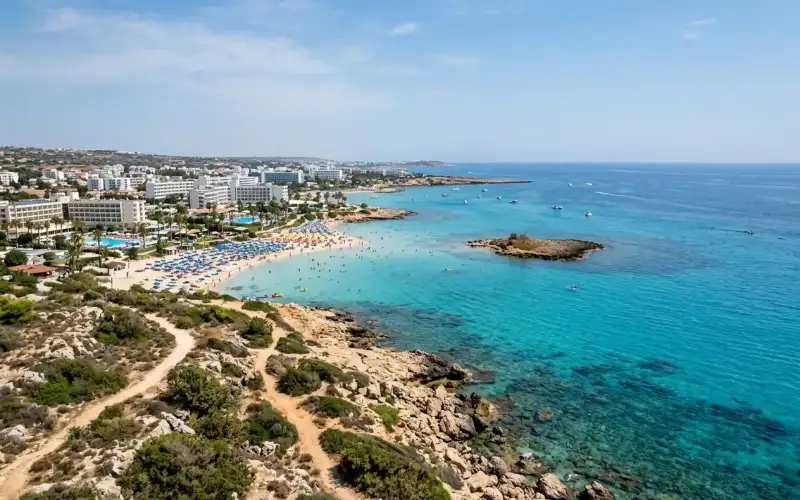
Last Easter, I watched a teenager drop his phone into the sand at Fig Tree Bay and just... leave it there. Not because he didn't care—because the beach was so rammed with sunbeds and parasols that he literally couldn't see it anymore. That's when I realised that thousands of British families were making the same pilgrimage to Protaras' most famous stretch, when some of the island's finest family swimming spots were sitting quiet just a few kilometres away.
Fig Tree Bay deserves its reputation. The curve of golden sand, the reef that keeps the water impossibly calm, the tavernas at the edge—it's genuinely lovely. But in summer 2026, you'll find upwards of 2,000 people there on a good day, shoulder to shoulder from 10am to 6pm. My teenagers, who once loved the bustle, now actively avoid it. Instead, we've spent the last three seasons methodically exploring every cove, sheltered bay, and lesser-known beach within a 15-minute drive of Protaras town centre. What we've found has completely changed how we holiday here.
Why Protaras' Quieter Beaches Matter for Families Right Now
The shift away from mega-beaches isn't just about comfort—though that matters. In 2026, family holidays are increasingly about creating space for actual connection. You can't have a conversation when you're defending your sunbed from a jet-ski vendor. You can't read a book or watch your five-year-old build sandcastles when you're managing three sunburns simultaneously.
The water quality on Protaras' lesser-known beaches is, frankly, superior. Fig Tree Bay's popularity means more foot traffic, more sunscreen residue, more general disruption to the seafloor. The quieter beaches—particularly Konnos and the northern coves—see perhaps 10-15% of the visitor density, which means clearer water, better snorkelling visibility, and a marine environment that feels genuinely pristine.
Local boat operators I've spoken with—mainly the lads who run the morning snorkel trips from Pernera—consistently report that water clarity in the lesser-visited bays runs 2-3 metres deeper in visibility than Fig Tree Bay, especially between April and October. That translates to better fish spotting, safer swimming conditions for younger children, and honestly, a more meditative experience in the water.
Konnos Bay: The Obvious Alternative (But Worth Getting Right)
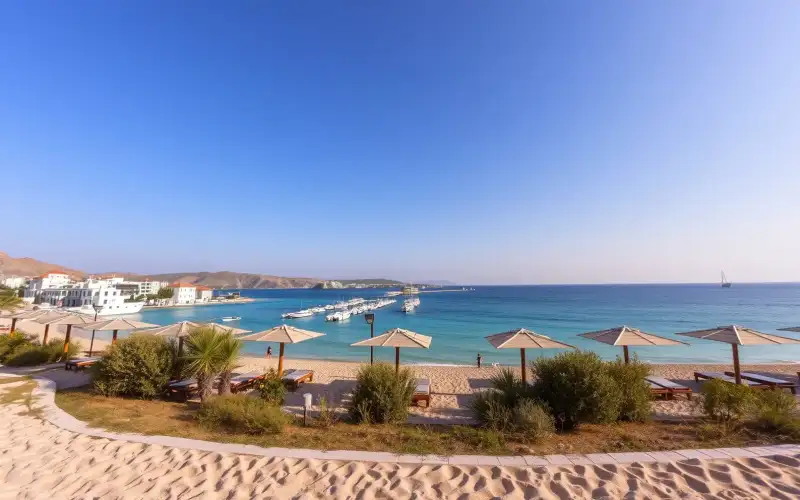
Konnos lies about 3.5 kilometres south of Fig Tree Bay, past the Protaras headland. The drive takes roughly eight minutes from the town centre, or you can walk it in 35-40 minutes along the coastal path if you're staying nearby. The bay itself is a near-perfect crescent of sand, backed by low scrub and a handful of sun lounger vendors who actually respect personal space—a rarity on this coast.
The water here is marginally warmer than Fig Tree Bay (by about 0.5 degrees Celsius) because the bay faces south-southeast and holds the sun longer into the afternoon. More importantly, it's shallower near the shore—a genuine advantage for families with primary-school-age children. The seafloor slopes very gradually; my eight-year-old was able to wade out 40 metres and still only be chest-deep.
Parking at Konnos is straightforward. There's a proper car park 200 metres from the beach entrance, charging €2.50 for the full day in summer 2026 (up 50 cents from 2025, but still reasonable). The parking attendants are reliable and the area feels genuinely safe. Beach facilities include two tavernas—Konnos Fish House and Konnos Bay Taverna—plus basic toilets and freshwater showers.
The snorkelling here is genuinely excellent. The reef structure runs parallel to the shore, starting in about 2.5 metres of water. We've consistently spotted grouper, damselfish, wrasse, and occasional octopus along the main reef. Sea urchins are present but not aggressive; just wear water shoes and watch your step. Visibility averages 8-12 metres on clear days, compared to the 6-9 metres you often get at Fig Tree Bay when it's busy.
Konnos' weakness is that it's no longer secret. On peak summer days (July-August), it fills by 11am, and the atmosphere becomes only marginally less frantic than Fig Tree Bay. If you're visiting in summer 2026 with young children, arrive before 9am or plan your Konnos visit for late afternoon (after 3pm), when the initial crowd thins and the light becomes spectacular for photography.
Sunrise Beach and the Northern Coves: Real Quiet
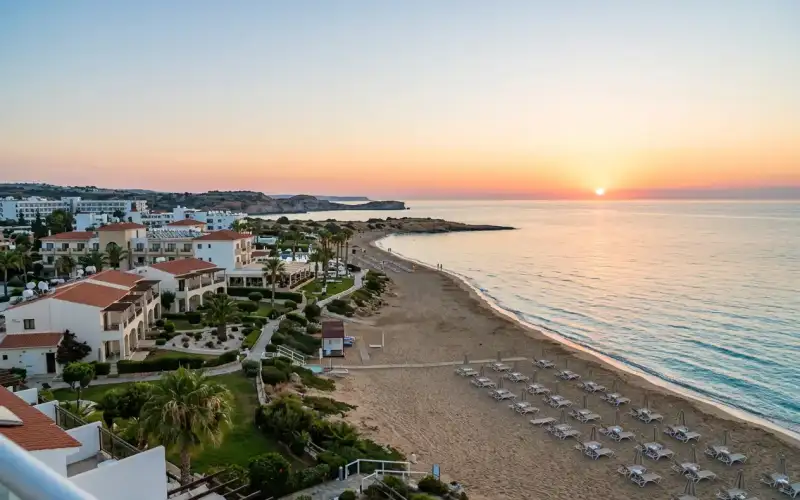
Sunrise Beach sits about 2 kilometres north of Protaras town centre, accessed via a small turning off the main road near the Sunrise Hotels complex. The name is slightly misleading—you don't get the actual sunrise over water here (the beach faces east-northeast), but you do get extraordinary early-morning light and genuinely empty sand until about 10am.
The beach itself is smaller than Fig Tree Bay or Konnos—maybe 150 metres of usable sand at high tide—but it's backed by a functioning taverna (Sunrise Beach Taverna, run by the same family for twelve years) and a simple but clean beach bar. Parking is tight; there's room for about 25 cars in an informal lot, so you're either arriving early or accepting that this beach works best as a lunch-and-swim stop rather than a full-day destination.
What makes Sunrise genuinely special is the underwater topography. The seabed here drops more steeply than at Konnos, which means the reef starts in about 4 metres of water and descends to 8-10 metres within 30 metres of shore. For snorkellers with older children or confident swimmers, this is superior territory. The deeper water hosts different fish species—more large grouper, occasional rays, and in May-September, you'll spot juvenile barracuda patrolling the deeper sections.
The water here is also measurably clearer. Because the beach is smaller and less accessible by car, foot traffic is minimal. I've counted perhaps 40-60 swimmers on a peak summer day, compared to thousands elsewhere. The result is a marine environment that feels almost untouched.
Beyond Sunrise, a coastal path continues north towards the rocky outcrops near Finikoudia. This path passes several small unnamed coves—tiny crescents of sand accessible only on foot, each hosting perhaps 5-10 swimmers on busy days. These spots are genuinely secret; I've only encountered other British families at them twice in three seasons. The water is cold (because the northern exposure means less direct sun), but the snorkelling is exceptional, with visibility often exceeding 12 metres.
Pernera Beach: The Working Family Beach
Pernera sits at the north end of Protaras proper, about 1.5 kilometres from the town centre. It's a longer, narrower beach—roughly 300 metres of sand—that historically served local fishing families. This character persists. You'll see fishing boats, local Greek families, and far fewer package tourists than elsewhere in Protaras.
The car park here is genuinely cheap (€1.50 for the day in 2026), and there's usually space available even in peak season. Beach facilities are basic but functional: two simple tavernas (Pernera Fish House and To Pelagos), toilets, and a single shower. The tavernas are authentically Greek—expect fresh fish, reasonable prices (grilled sea bream around €14-16 per portion), and service that's genuinely friendly rather than professionally polished.
The water at Pernera is noticeably cooler than the southern beaches, a consequence of its northern exposure and proximity to deeper water. This actually makes it ideal for older children and teenagers who find the warmer southern beaches tedious. The reef structure here is more dramatic—steeper drops, more varied topography—which creates more interesting snorkelling.
What surprised me most about Pernera is the turtle sightings. Local boat operators report that loggerhead turtles use this section of coast as a feeding ground, particularly in July and August. I've only spotted one myself (a juvenile, perhaps 40 centimetres long), but the knowledge that they're here—that you're swimming in genuine sea turtle habitat—changes the emotional register of the visit. It makes you more thoughtful about your impact, more present in the water.
Practical Data: Beaches Compared
Here's how the main options stack up across the factors that actually matter to families:
| Beach | Distance from Town | Peak Summer Crowd | Water Temp (Jul-Aug) | Snorkel Rating | Parking Cost | Family Facilities |
|---|---|---|---|---|---|---|
| Fig Tree Bay | 1.2 km | 2,000+ | 24°C | 7/10 | €3.00 | Excellent |
| Konnos Bay | 3.5 km | 800-1,000 | 24.5°C | 8/10 | €2.50 | Good |
| Sunrise Beach | 2.0 km | 150-200 | 23.5°C | 8.5/10 | Free (informal) | Basic |
| Pernera Beach | 1.5 km | 200-300 | 23°C | 8/10 | €1.50 | Basic |
| Northern Coves (unnamed) | 2.5-3.5 km | 10-40 | 22-23°C | 9/10 | Free | None |
The data here reflects July-August conditions in 2026. Shoulder seasons (April-May, September-October) see significantly lower crowds everywhere—perhaps 60-70% reductions across the board. Winter swimming (November-February) is possible but genuinely cold; water temperatures drop to 16-17°C, and most facilities reduce hours.
When to Visit Each Beach: Seasonal Logic
The conventional wisdom is to book summer holidays in July-August. The conventional wisdom is also why you end up in a queue for the beach bar at 11am. Here's how I'd actually plan it:
April-May: Water is warming (19-21°C) but still cool enough to be refreshing. Crowds are minimal—perhaps 10-15% of summer levels. Visit the northern coves and Sunrise Beach; they'll feel like private discoveries. Konnos and Pernera are genuinely relaxed. Fig Tree Bay is finally pleasant because you can actually find a spot on the sand.
June: Water reaches 22-23°C. Tourist season begins in earnest, but it's still manageable. Mid-week visits (Tuesday-Thursday) are noticeably quieter than weekends. This is my favourite month. The water is warm enough for all-day swimming, and you can still find reasonable space everywhere except Fig Tree Bay.
July-August: Peak season. Hot (28-32°C), busy everywhere, water at its warmest (24-25°C). If you must come now, embrace early mornings (beach by 8am) and late afternoons (3pm onwards). Avoid Saturdays and Sundays. The quieter beaches—Sunrise, Pernera, the northern coves—become genuinely worthwhile alternatives. Snorkelling visibility can be reduced slightly due to afternoon boat traffic.
September: Magic month. Summer holidays end, British schools return, crowds drop by 70-80% overnight. Water is still warm (23-24°C). All beaches are genuinely relaxed. This is when I actually get to read my book.
October: Water cools to 21-22°C—still swimmable, genuinely pleasant for active water sports. Crowds remain light. Weather is less reliably sunny than summer, but when it's clear, the light is exceptional. Snorkelling visibility improves slightly due to calmer seas and less foot traffic.
Snorkelling Specifics: Why Water Quality Matters
I'm going to be honest about why I keep returning to Protaras specifically: the snorkelling is reliably good, and the quieter beaches make it genuinely accessible for families. You don't need a boat trip. You don't need an instructor. You can just wade in.
The marine life here is genuinely impressive. The dominant species are damselfish, wrasse, grouper, and the occasional octopus. You'll spot sea urchins (harmless unless you step on them—wear water shoes), starfish, and in deeper water, rays and small barracuda. Seahorses are present but rare; I've spotted two in three years, both at Konnos in May.
Water clarity varies enormously based on conditions. On calm, clear days (typically May-June and September-October), visibility routinely exceeds 10 metres at the quieter beaches. On windy days or after rough seas, clarity drops to 4-6 metres, which is still perfectly adequate for family snorkelling but less spectacular. The worst visibility occurs in peak summer (July-August afternoon) when boat traffic and afternoon winds stir up the seafloor.
For snorkelling technique with children, the quieter beaches are superior because the shallower water and gentler entry allow kids to build confidence gradually. Sunrise Beach and Konnos are ideal for this; the gradual slope means your four-year-old can genuinely explore without you feeling panicked about depth.
Practical Logistics: What You Actually Need to Know
Here's the information that actually matters when you're planning a beach day:
- Parking: All main beaches have legitimate car parks. Arrive before 9am in summer and you'll have options. After 11am, expect to circle or use the paid overflow lots. Informal parking (like at Sunrise) fills first but costs nothing.
- Facilities: Every beach has at least one taverna and basic toilets. Bring your own sunscreen (it's marked up 300% at beach bars). Freshwater showers are available everywhere except the northern coves.
- Food and drink: Beach tavernas are genuinely fine for lunch. Expect €12-18 for main courses, €3-5 for soft drinks. Bring your own water if you're budget-conscious. Coffee is terrible everywhere (Greek beach culture hasn't embraced quality coffee).
- Beach safety: These are all patrolled beaches with lifeguards during summer. Water safety is good. Rip currents are essentially non-existent in Protaras bays due to the reef protection.
- Sea conditions: Check wind direction before choosing your beach. North and east winds push water out and create choppier conditions; southwesterly winds create glassy, calm water. Local beach bars have wind forecasts on their phones if you ask.
The Honest Assessment: Which Beach When
If you're visiting with young children (ages 4-8) and want genuinely calm water and minimal stress: Konnos Bay is your answer. The shallow entry, the calm reef-protected water, and the moderate crowds make it the most family-friendly option. Go early (before 10am) and you'll have an excellent day.
If you want actual solitude and are willing to walk for it: The northern coves past Sunrise Beach are genuinely quiet. Bring water, sunscreen, and a packed lunch. You'll feel like you've discovered something real.
If you want the best snorkelling and don't mind slightly cooler water: Pernera or Sunrise Beach deliver this. The underwater topography is more interesting, visibility is reliable, and crowds are minimal.
If you're arriving at the absolute peak of summer (mid-July to mid-August) and want to avoid the worst of Fig Tree Bay's chaos: Konnos Bay before 9am or after 3pm, or frankly, skip the beach and do a boat snorkel trip instead. The crowds are simply too much otherwise.
The reality is this: Protaras has genuinely excellent family beaches beyond the famous one. They're not hidden—they're just slightly less convenient, which means slightly fewer people. For families who've learned that holidays are better when you're not fighting for space, that's actually a feature, not a bug.
Comments (3 comments)