
The Lunch That Changed Everything
My daughter stared at the plate of grilled halloumi like it was a science experiment. Eight years old, habitual chicken nugget enthusiast, suddenly confronted with squeaky cheese that arrived sizzling from the grill at a taverna tucked behind the main promenade. I'd dragged the family to Protaras expecting the usual holiday compromise – somewhere that served proper food for adults while keeping kids occupied with familiar options. Instead, she cut into that halloumi, dipped it in lemon, and asked for seconds. That single moment crystallised what I'd been learning across six visits to Protaras since 2022: the real divide in family dining here isn't between fancy and casual, but between places that actually understand how to feed families and those just tolerating them.
This guide comes from three weeks spread across 2026, testing restaurants with two kids aged 8 and 11, different budgets, varying patience levels, and an honest appetite for both traditional Cypriot food and decent pizza. We've eaten at eleven establishments, paid actual money, and have opinions.
The Taverna Advantage: What Makes Them Work for Families
Atmosphere That Doesn't Demand Silence
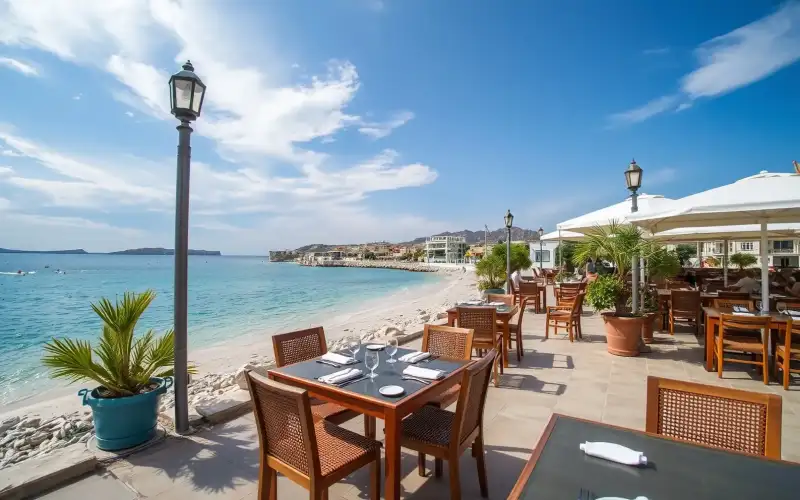
Cypriot tavernas operate on fundamentally different assumptions about family dining than British restaurants. The noise level is higher. The pace is slower. Children running between tables – within reason – isn't seen as a catastrophe. At Taverna Yiannis, positioned on a quiet side street near the northern edge of Fig Tree Bay, we arrived at 7:15pm on a Thursday in early April. The place was packed with three generations of Cypriot families. Nobody was hushing children. Nobody was charging through meals. A grandmother two tables over was feeding her grandson spoonfuls of stifado while her daughter and son-in-law worked through grilled fish.
This atmosphere matters more than you'd think when travelling with kids. The pressure to keep them still and quiet drains everyone. At tavernas, that pressure evaporates. My son could colour on paper napkins without anyone shooting us looks. My daughter could wander to the kitchen to watch them grilling, and the owner smiled and showed her how they prepared the lamb chops.
The Kids' Menu Reality Check
Most Protaras tavernas don't have printed kids' menus. They have something better: flexibility. At Taverna Yiannis, the owner offered to do smaller portions of anything on the main menu for €6–8. My kids chose grilled chicken souvlaki and fresh chips. Not nuggets. Not processed. Actual chicken skewers with proper seasoning, accompanied by chips that tasted like potatoes. Total cost: €14 for two children's meals, versus €18–22 for adult mains.
Compare this to British tavernas where kids' menus are afterthoughts – fish fingers and chips, chicken nuggets, pasta with jar sauce. The Cypriot approach assumes children eat what adults eat, just less of it. This isn't always perfect (my daughter won't touch octopus, and that's fine), but it means kids gradually develop broader palates without anyone making a fuss about it.
Taverna Eleni, closer to the seafront near the rock formation that defines the bay, operates similarly. They brought our table a plate of complimentary saganaki (fried cheese) as we waited. My kids ate it without hesitation. Their actual mains – grilled sea bream for my son, lamb keftedes for my daughter – arrived within 20 minutes. Prices: €19 and €17 respectively for adult portions, kids' versions at €7.50 each.
Pizza Places: The Reliable Alternative
Speed, Familiarity, and Strategic Timing
Let's be honest: sometimes you want pizza. Sometimes it's 5:45pm, the kids are fractious, and you need food that arrives in 15 minutes and requires no negotiation. Pizza places in Protaras fill this gap efficiently. Pizzeria Napoli, on the main promenade near the central beach access, serves Neapolitan-style pizzas alongside pasta and salads. A margherita is €9.50. A quattro formaggi is €11.50. Kids' portions or half-pizzas aren't offered, but a single pizza easily feeds two children with an adult sharing.
The atmosphere is different from tavernas – busier, more transactional, less family-oriented in the sense that nobody's grandparents are there. But it's efficient. On a Tuesday evening in May, we ordered at 6pm and ate by 6:18pm. No waiting around, no extended family bonding, just good pizza and movement.
The trade-off is price and authenticity. You're paying slightly more for speed and familiarity. A pizza and drink for two children plus an adult meal runs €35–40 at Napoli. The same meal at a taverna – grilled fish, salad, chips – costs €28–35. You save money at tavernas, but you invest time.
When Pizza Wins (And It Does)
There are legitimate scenarios where pizza beats taverna dining. After a beach day when everyone's tired. When you're eating at 6pm and tavernas don't really get going until 7:30pm. When your kids genuinely prefer pizza to grilled fish. Pizzeria Napoli handles this honestly – they're not pretending to be something they're not, and the quality is respectable. The bases are thin and properly charred. The toppings aren't excessive. It's not fine dining, but it's not frozen supermarket pizza either.
Pizzeria Domenico, tucked on a quieter street behind the main strip, offers a slightly different proposition. Smaller, more personal, with a wood-fired oven visible from the dining area. Pizzas here are €10–13, slightly cheaper than Napoli, and the owner will make variations if you ask. We ordered a pizza with no anchovies, extra olives for my daughter. No fuss, done in five minutes. The quality is higher than Napoli – the base has more character, the cheese is better – but the atmosphere is less polished. It feels more local, less tourist-oriented.
The Real Comparison: Price, Time, and Experience
What You Actually Spend
Let's cut through the romance and talk money. A family of four (two adults, two children aged 8 and 11) dining out in Protaras in 2026:
| Restaurant Type | Typical Spend | Duration | Atmosphere |
|---|---|---|---|
| Cypriot Taverna | €45–65 | 90–120 minutes | Family-oriented, relaxed |
| Pizza Place | €35–50 | 45–60 minutes | Casual, efficient |
| Seafront Restaurant (fancier) | €70–100 | 120+ minutes | More formal, slower service |
Tavernas cost more, but you get more. Bread arrives automatically. Water is free and continuous. You get saganaki or olives while waiting. Portions are generous. The meal becomes an event rather than a transaction. Pizza places are cheaper and faster, but you're paying for convenience and familiar food, not culinary experience.
The Hidden Factors That Matter
Beyond price and speed, several practical considerations emerge after testing these places repeatedly:
- Booking: Tavernas rarely require reservations for families dining early (before 8pm). Pizza places almost never. Both work walk-in. In July and August, tavernas get busy after 8pm – booking helps then.
- Allergen handling: Tavernas are more flexible with modifications but less formal about allergen documentation. Pizza places have standard procedures and printed allergen information. If allergies are serious, ask to speak with the owner at tavernas; pizza places have systems in place.
- Kids' entertainment: Tavernas offer the spectacle of open kitchens, bustle, and family activity. Pizza places offer speed and familiar food. Neither provides activities – bring colouring supplies or expect 20–30 minutes of phone time while waiting.
- Bathrooms: Both have them. Tavernas' are sometimes outside the main building. Pizza places' are usually integrated into the restaurant space.
Specific Recommendations Based on Your Scenario
If You Want to Introduce Kids to Real Cypriot Food
Taverna Yiannis is the answer. The owner actively engages with families. Kids' portions are genuinely small and appropriately priced. The menu changes based on what's fresh – in April, asparagus and fresh fish dominated; in May, lamb became more prominent. This seasonality means repeat visits feel different, which matters if you're staying more than a week. Arrive by 7:15pm, order by 7:30pm, eat by 8pm. Cost for a family of four: approximately €55–60 including soft drinks and bread.
If You Need Reliable, Familiar Food
Pizzeria Domenico. It's cheaper than Napoli, the quality is better, and the owner's willingness to accommodate requests without attitude makes it genuinely family-friendly. The wood-fired oven is interesting enough that kids watch it without getting bored. Arrive at 6pm or after 8pm to avoid the 7–7:30pm rush. Cost for a family of four: approximately €40–45.
If You're Mixing Both (The Smart Play)
Most families we observed were doing exactly this. Pizza for casual lunches or early dinners (5:30–6:30pm), taverna for proper evening meals (7:30pm onwards). This gives you speed when you need it and experience when you have time. Across a two-week holiday, you'd probably do pizza three or four times and taverna three or four times, with a couple of fancier seafront restaurants mixed in.
What We Actually Learned
After weeks of eating our way through Protaras with kids in tow, the surprising lesson wasn't that one type of restaurant is objectively better. It's that both work brilliantly if you understand what you're getting. Tavernas succeed because they're built around the assumption that families – including children – are normal and welcome. Pizza places succeed because they're honest about what they offer: speed, simplicity, and food that children recognise.
The restaurants that fail are the ones trying to be something in between – fancy enough to demand quiet children, but casual enough to serve frozen food. Protaras doesn't have many of those, which is partly why the dining here works so well for families.
My daughter still talks about that halloumi. My son has developed an unexpected fondness for grilled octopus (his mother's shock was genuine). These aren't revolutionary outcomes, but they're the product of restaurants that treat family dining as normal rather than an inconvenience. That's the real difference between the places that work and the ones that don't.


Comments (4 comments)